
Conversation Themes
Choose Theme
Motivation

For 100 years, young people have joined the St John Ambulance Youth and Cadet program for many reasons — learning first aid, making friends, and giving back to their community. These stories share what motivated them to join and stay part of this remarkable program.
Listen to our stories
- 0.5x
- 0.8x
- 1x
- 1.2x
- 1.5x
- 2x
View Transcript
Malcom Knight: What motivated me to join? I was interested in becoming part of a community organization and the thing that sprang to mind was the RFS. And because I had asthma, my mom said, oh, I don’t really want you going out fighting bushfires, why don’t you join St. John? I didn’t know anything about St. John, but my mom had been to school with somebody who was in St. John, and that would’ve been in the 1940s and so she suggested she went looking for a St. John division.
Jodie: When I was 11 years old my mom and I went down to look through the carnival, the festival, and we saw a St. John demonstration there. So it is from that point seeing other cadets in uniform with bandages and resuscitation dolls, et cetera. That got me interested.
Lyn Dansie: I joined as a cadet in the division known as the Service and Nursing Cadet Division. In those days the ambulance and nursing cadets as they were known were all separated. You never had mixed divisions, there were male divisions and female divisions.
Tim Duncan: I used to go to the footy at the old Collingwood Football Ground. If you’re not from Melbourne, Collingwood is a famous old club. My dad and I used to catch the train down there, and I used to see a couple of St. John volunteers on the station getting the train as well. Mum was an adult member and Mum was a cadet. No child safety rules in those days, you know, quotas and all that. And I gotta be honest, it wasn’t any philanthropic thing or desire to help mankind. I just really liked their uniform.
Noel Hender (Part A): That was one of the things I think that probably attracted me to St. John right from those early days. My father was quite a good footballer of his time. And I used to go to the football and I would always see these young lads in uniform, and they always got the best seats. Right down the front on the benches in the front, inside the oval fence. So I thought that’s a pretty good position. And they looked pretty smart and got people’s attention and I thought, oh yeah that, that looks interesting. So I think that was probably one of the factors that drew me to joining in the first place.
Sally Hasler: So Mum and Dad had this rule that we had to do swimming lessons and we had to learn first aid.
Melissa Oxley: So I’m the eldest of five children and I have two sisters who are just only a year and a half younger than myself. And so there’s three of us in three years. And I guess as younger children, we were looking for an activity or a hobby, something that we could get into as a family, really, you know, we played netball together, but we were never in the same team of course ’cause it was age related and it was through a school friend actually that went along to an information night. And it was just sort of word of mouth. Like, one of our mutual friends had started.
Robert Wilson: When he came out to talk about joining St. John and everything like that, a few other classmates were also interested in joining. And I went home after school and I said to mum, I’d like to join St. John. And Mum had a bit of a giggle because she thought, well, okay, you didn’t want to join scouts and you didn’t wanna do anything else, so you want to join cadets. Okay, let’s give it a go, I don’t think you’ll last too long. Well, clearly she got that completely wrong and I’m still in it today.
Melissa Oxley: It was fun and there was a sense of community and other children, and I know we just kept going back and it was every Tuesday night. And I guess the reason we stayed was because it was economical for my Mum having five kids, you know, it was a hobby that we could afford and very soon we became, we made lots of friends through it. And a Tuesday night was, you know, a nice night to get the kids out and, you know, and learn some skills.
Carl Graham: Well, one of the things that kept me engaged in the cadet program was it actually gave me a sense of purpose. ’cause I was a bit of a shy teenager growing up in a country town. So that ability to develop confidence to go and, you know, talk to a complete stranger when they’re in time of stress and need and, you know, to open up a conversation to understand what’s wrong and what I needed to treat. Confidence to stand up in public first aid courses and to publicly speak to deliver training. To be involved in fundraising activities during the school holidays. Like it used to be in my original hometown. There used to be a Christmas festival for a week, and one of the divisional fundraising activities used to be running a pancake store.
Shevera Gunasekera: I would go on a Wednesday night, I would go to my divisional meeting and I would be a bunch of people who I could just fit in with. And as a teenager who was also severely bullied in school too, that was my outlet.
John Ward: I think it was the friendships and other things you learn. You know, I enjoyed going to the meeting, divisional meeting every Friday night. We did all sorts of things, you know, went to movies, camps, you know, outings, you know, all those sorts of things. Some of them now you can’t do because the world’s changed and that. You know, and there’s nothing wrong with that.
Allan Mawdsley: When I was going on a one penny tram ride from Glen Iris up to Malvern to the divisional meeting nights. Yes, traveling on the tram by myself in the evenings was not part of the ordinary.
Jo-Anne Crennan: Prior to being at what was called at St. John junior back then, the eight to 11 year olds I was the mascot of the division. So I still went to all the events sort of stuff in the background and I’d watch what everyone was doing. And as I got older, I saw my brother going off to concerts and all the fun activities. So, I just wanted to be a part of it.
Robert Tremethick: I really only wanted to be an ambulance officer. That was the beginning of something that I wanted to do and really enjoyed doing it.
Allan Mawdsley: Well, I found it to be an organization that just gave me a sense of being able to do something for the public on a larger scale than you can just as an individual person. It’s kind of, part of an organization that’s devoted to serving the public and in the field that I like working.
Damian Kaushik: I joined St. John as a cadet in 2009 at Western Suburbs Cadet Division inner West Sydney. I joined the program funnily enough because my mum dragged me and tried to get me away from computer games. This is actually what happened, and she said, you need to do some good in the community and I want you to do some volunteering based work.
Cachia Paul: I was a member of St. John Ambulance, I believe, from the age of eight until I think I was about 22, maybe 23. And originally I started going and visited a friend that I’d known since primary school. And my Mum was friends with her mother as well. And we would just have a chat and discuss what we got up to on the weekend. She mentioned how she had recently joined St John Ambulance. And was participating in first aid competitions.
Damian Kaushik: I think the like, and I think the other good thing about Cadets was that it really the program itself allows for people to be challenged or gives you an opportunity to challenge yourself. So, you know, I, and I took on a lot of those challenges as a young member. You know.
Steph Ave: For me, a lot of it is not just the clinical side and learning side of St. John, it’s actually the social side and keeping in contact with such great people that are on the same wavelength as me that wanna help people and we all just click that way.
Alan Brown: What kept me involved with St. John as a cadet was a sense of action, of community action. Initially as a cadet, we were all used to diligently reciting the cadet code of chivalry at every meeting, but we lived it week to week. So it wasn’t just a set of words that you rambled off just to make somebody happy. It actually felt to me like it connected. The impact St. John had on me, both professionally and personally was profound. As a cadet, I was introduced obviously to first aid, but we were also introduced to home nursing. Now, that was a significant part of what St. John did in those days.
Motivation conversation
Contributers
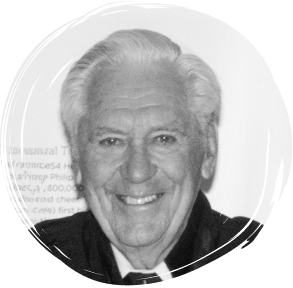
David Heard

1944
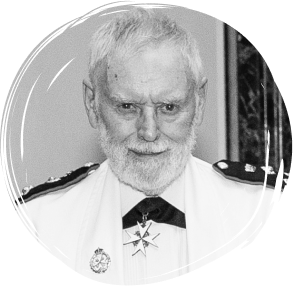
Allan Mawdsley
1949
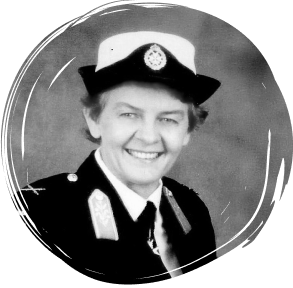
Lyn Dansie
1949

Noel Hender
1957
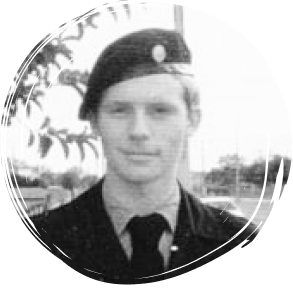
Robert Tremethick
1972
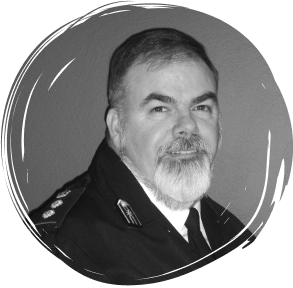
Alan Brown
1974
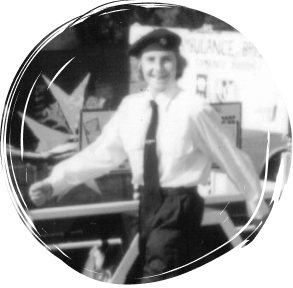
Malcolm Knight
1980

Robert Wilson
1981

Jo-Anne Crennan
1983
Carl Graham
1985
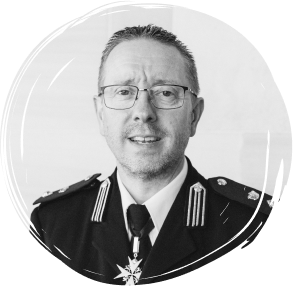
John Ward
1986
Melissa Oxley
1987
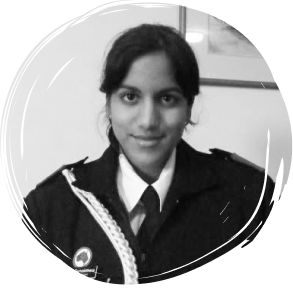
Shevera Gunasekera
2004

Damian Kaushik
2009
Stephanie Ave
2009
Jodie
Paul Cachia

Sally Hasler
Tim Duncan
