
Conversation Themes
Choose Theme
Changes in the Program

For 100 years, young people have joined the St John Ambulance Youth and Cadet program for many reasons — learning first aid, making friends, and giving back to their community. These stories share what motivated them to join and stay part of this remarkable program.
Listen to our stories
- 0.5x
- 0.8x
- 1x
- 1.2x
- 1.5x
- 2x
View Transcript
Carl Graham: Well, one of the things I think is the newer revised program is actually coming very much back to what the cadet program of old, so, you know, the cadet program when I joined the focus was like on learning your first aid skills and your patient care skills. You did some skills in your management and leadership. Your training skills you’ve learned a few proficiency subjects that were useful, things such as all map reading and clerical abilities, knowledge of the order. Then I think, you know, time became, you know, we got a lot more diversification in proficiency programs such that the program became a bit of everything and we sort of lost the focus. But now I think you think what we’re seeing now is the programs back to what it was before. A program that is actually very much focused on being a development program. We’re very much a health and human services.
Jodie: St John is very different today. The uniform is an obvious one. So we started off in white dresses.
Robert Wilson: I mean, the rules have changed a little bit from in my time as a cadet to now. [Now] cadets aren’t allowed, or no one’s allowed to go on the train, you know, to public transport in uniform. Whereas back when I was a cadet we traveled the trains in uniform and wheat to the footy and all of that.
Noel Hender: There was an active senior division, adult division,or divisions I should say, because there was the ambulance male division and the nursing division, and the cadets were able to work with adults from across both those divisions. So we had quite a range of duties that we could attend, and I can fondly remember attending, and these were all local type duties, but fondly attending the local football games.
Susan Robertson: We used to do a lot of things with the nursing division because in those days we were separate.
Melissa Oxley: The rules have changed. But back then, I think as a cadet each year at Government House you get, you know, awards for how many hours you contribute. If you’re a cadet, it was like you had to do four hours to be officially noted for one official hour to count.
Noel Hender: I mentioned March because in those days drill and discipline were very much part of the organization and our training nights used to be spent on either first aid skills and developing the skills so that we could tie reef knots behind our back or with our eyes blindfolded. And we could do that without hesitation. And the other side of focus in those days was probably drill and parades. So that we looked like little military groups because we were taught how to salute, how to stand to attention, how to standardize, how to open order, how to write, dress, and all of those things were done very precisely and according to the rules.
Lyn Dansie: I was involved in helping to, you know, set up new manuals and we set up the first Australian Cadet manual for the cadets.
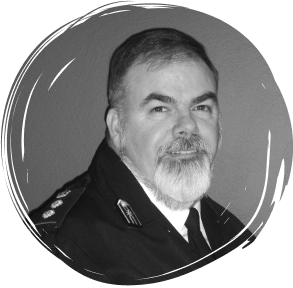
Alan Brown: Well, the idea was that first aid you could do anywhere. But it would be the immediate care of somebody that had become suddenly ill or injured. Whereas home nursing was designed to look after people in their home who had returned from hospital or had opted not to go to hospital. Now, back in the seventies, that was not a common thing to do and people were often required to be in bed for longer periods. So that need to understand how to care for people at that point was a useful set of skills.
Melissa Oxley: I remember going back in the, and I don’t think they would do it now, but back in the late eighties, you know, I would go to the MCG and they’d already have me down. You know, on a patrol with people I didn’t even know.
Tim Duncan: Look, when I was a kid, a cadet, it was quite a military thing. There was a parade and marching and still somebody used to bring along a turntable and play records of marching music. We’d all march around the hall every year before the annual inspection at Government House to make sure we got it right, which is pretty funny when you think about it. But it was fun.
Mawdsley Allan: Otherwise you know, routine football duties and show, show and anzac day and things like that. I remember being in uniform as a cadet, you were essentially assisting the adult members, yeah, carrying bags and carrying radios and carrying stretches and things like that, and running messages rather than doing much in the way of first aid.
Noel Hender: We were aware that numbers were floundering a little and a lot of the opportunities that cadets are faced with in their senior years is that, is their lack of time, if you like. They have strong demands on them for their school studies. And then we on top of them as St. John, are asking to come along and do extra work there and attend during the week when they need to be studying. So, one of the opportunities I had here in South Australia, both from my role within the education department and also with St. John, was to try to connect what we were doing in St. John with what young people would get recognition for. And so, at this stage they were introducing the South Australian Certificate of Education or the safe as it’s known. And so from my context, I was able to. Look into whether it was possible for some of our proficiency certificates or our first aid certificates or combinations of all of those, that could contribute in some way to learning that was occurring outside of the classroom or as was deemed in the safe as community education. So, we were able to get recognition through the safe certificate. So our cadets did have a lot of opportunity and I think that’s one of the big differences from then to today where we tend not to have that sort of level of opportunity provided for many of our cadets, which is unfortunate.
Robert Wilson: I think that you know, everything was a little bit risky back then. I mean, we’re talking about child protection and all of that now, and I’m all for that. I think that yes, the changes needed to happen and had to happen, and I think that. You know, now it’s more focused on youth and how they’re feeling and their experience.
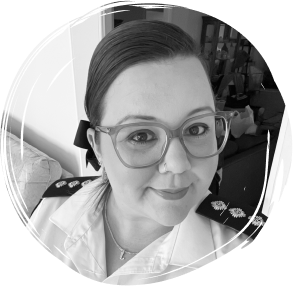
Robson Jessica: Back when I was a cadet, you were allowed to have all your offices as friends on Facebook. It wasn’t so much of an issue. They could post photos of you on social media. It wasn’t as strict as what it is now. But in saying that, looking at the strictness of it now, it actually is to protect our youth.
Tim Duncan: I don’t think it’s any better now or, I don’t think it was,like guys my age were always banging on about how things were better in the old days. I don’t think that’s true at all. I think we were just lucky, you know, I think we were just lucky if things went well. We scraped through, but nowadays things are far better controlled, you know, all our controls around child safety, peer support, how we behave you know, how we respond to things like your domestic violence, all those sort of things they were not talked about then at all, and now they are. Some people find that challenging, whereas I just think it’s such a wonderful thing that we’re prepared to talk about all that stuff now, so.
Jo-Anne Crennan: We met a lot of people over that time. So especially at the start, it was very much just the local division and we were very much a family division. Without being a family division. So when everyone else was turning over to all the cadets and adults basically meeting together at the same time being family divisions, we were still nursing cadets, ambulance cadets. Ambulance members, nursing members. But literally like the mom would be in the nursing members. The dad would be in the ambulance and the kids would be in the different cadet division. So we were very much family.
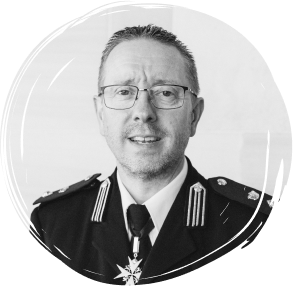
Ward John: So, there was excitement about going to another event, whether it was a duty, a camp or some meeting or something where cadets from other divisions would be coming and you’d get to see your friends again. So, that was one of the things I think that it also has changed a bit, was like, so you’d go on these camps, you’d meet up with someone, you’d become friends, and then you’d go up and leave the camp and maybe you’d have a street address and you’d write to them, or you’d then be trying to work out when you’d next see them at which St. John event, because you know, are you going to the city to surf? Are you gonna go to the camp at Blackland? So sometimes people would just go to the camps at Blackland, not because they wanted to do the badge or that, but just ’cause they wanted to be, meet up, you know.
Tim Duncan: I think one of the changes now, there’s a lot more emphasis now on the skills that the youth members and cadet members have, whereas when I was young, it was pretty much you got a very basic certificate. You were never really allowed to increase your level of your scope, if you like, as a youth member. It just stayed the same throughout your six or seven years. And if you went to an event, if you knew the adult members, if they knew that you’d been around for a while and you were okay, they’d let you do a little bit more. But otherwise, your main job was to carry their first aid kit.
Changes in the Program conversation
Contributers
David Heard

1944
Allan Mawdsley
1949

Noel Hender
1957
Susan Robertson
1969
Robert Tremethick
1972
Alan Brown
1974

Robert Wilson
1981

Jo-Anne Crennan
1983
Carl Graham
1985
John Ward
1986
Melissa Oxley
1987
Jessica Robson
2003

Damian Kaushik
2009

Stephanie Ave
2009
Alana Cornish
2016
Jodie

Sally Hasler
