
Conversation Themes
Choose Theme
Duties

For 100 years, young people have joined the St John Ambulance Youth and Cadet program for many reasons — learning first aid, making friends, and giving back to their community. These stories share what motivated them to join and stay part of this remarkable program.
Listen to our stories
- 0.5x
- 0.8x
- 1x
- 1.2x
- 1.5x
- 2x
View Transcript
Allan Mawdsley: When I was a junior cadet, I just sort of went along with whatever the activities were that were organized by the officers. And so, it was a sort of passive thing and I don’t remember a lot of the duties or a lot of the actual training knots. I remember things like going into competitions and I remember going to Government house and the church parades and those kinds of things. And special duties, the one that I remember most vividly is the Grand Prix Formula One Grand Prix when it was at Albert Park in the 1950s, standing Trackside separated from the racing cars by a couple of hay bales.
Malcolm Knight: But back in my time as a cadet I saw Split Ends at St. Live Showground in 1982, I think. Not that I was ever a big concert goer, but that they were a very big band at the time.
Jo-Anne Crennan: So to be able to do something exciting, like, the concerts and the grand finals, ’cause we were quite a large division. You had to make sure that you were in your spot.
Noel Hender: We used to attend the local football duties. I remember one of our responsibilities was to go in. A little bit earlier before the game started and collected the old furley stretcher that was kept inside the club rooms and folded it up neatly and marched out to the point where it was held just inside the fence in case it had to be used.
John Ward: Every breathing hour, I’d be somewhat involved in something, whether it was a meeting, a duty, you know, some weekends as a cadet, I’d go from, you know, go to the divisional meeting Friday night. There’d be duty all day, Saturday duty, Saturday night duty, Sunday, and then that was then home Sunday night, and it was back into the week again.
Jodie: It was just my mum and I, so we didn’t have a lot of money, so I never could afford a ticket. So, you know, I was able to see these concerts as well while being on duty, as long as there weren’t too many patients.
Noel Hender: Back to duties. So, football was always a popular one with me. But we would also do things like the Morphettville Racecourse course was also well and truly within our territory. And so we would go up to the race course with the adult members and again, we would. Be inside the course fence, which was always very exciting. And I remember being deployed along the track you’d be placed in those days. There used to be lots of jumping events, so, if there were steeple chasers and hurdle events. And so, we were always deployed at a steeple jump or a hurdle and ready for action, which often came. I can clearly remember one of the horses fell one day and the jockey went down face, face into the mud which was around the track. And the adult member that I was in was quick to recognize that when we got out there and he was laying sort of motionless on the ground. The airway needed to be checked quickly. And sure enough you know, he had carved out the great flog of dirt and mud from the tract and into his mouth, which could have compromised the airway. And so we cleared that airway and that was a job well done.
David Heard: But those cadet years some of the things, the duties, we covered the Christmas pageant, which was a big thing. Still this big in Adelaide. We used to cover the races at Victoria Park and Morphettville. And that was a pretty popular duty actually because the racecourse people used to provide us with afternoon tea and that consisted of a cool drink and fruit cakes and all the fancy stuff and the sandwiches. And so we always put our hand up for duty at the race course.
Robert Tremethick: We would turn up at Morphettville race course. Mum would drop me off at mum and dad would drop me off at the race course and we’d rendezvous at the first aid room. But every cadet got to be taken by the ambulance crew to go inside the track and travel in the ambulance. And that was the beginning of the excitement of being an ambulance officer.
Melissa Oxley: So being at Werribee, we did all the equestrian. There was always an equestrian down at Werribee Park every Saturday, Sunday. And so I just put my hand up for all of those. I did all the grand finals at the MCG yeah. And all the other duties we had used to have, do so many duties in the late eighties, early nineties. We had a lot of duties.
David Heard: On the other hand we covered harness racing, which was held in those days at the Adelaide Showgrounds. And that was quite interesting too because we used to march out across the racetrack to go out into the center and then disperse to various corners. And we were always amused that the fellow followed up behind us with a broom and swept our foot marks off the track. We couldn’t make out what that was all about. But he said if the horses came round and saw that line across there, they would jump and it would upset their harnessing.
Shevera Gunasekera: Mind you, we would wake up at four o’clock in the morning to go to an event that Saturday because we had to be there for the prep. But there were so many fun memories, like city Surf was fun.
Noel Hender: We had the casualty room, which was placed right on the foreshore, right next to the Surf Lifesaving Club. And you know, there’d be literally thousands on the beaches, on a hot day.
Now in those days, surf lifesaving club did not do any first aid, they weren’t there for that purpose, that was in our realm. And so we had our members on duty and if we had enough duty members, we would patrol the beach by going up and down the foreshore with our little havasacks over our shoulder and our water bottles, et cetera. But other than that, we would operate from the first aid casualty room.
Duties conversation
Contributers
David Heard

1944
Allan Mawdsley
1949
Noel Hender
1957
Robert Tremethick
1972
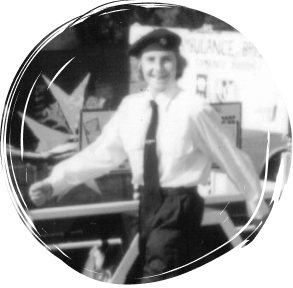
Malcolm Knight
1980

Jo-Anne Crennan
1983
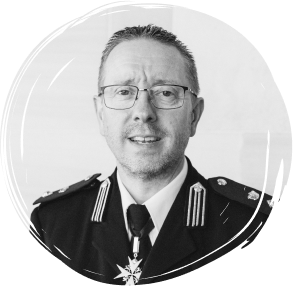
John Ward
1986
Melissa Oxley
1987
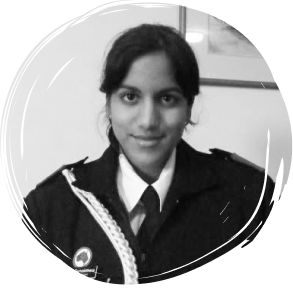
Shevera Gunasekera
2004
Jodie
