
Conversation Themes
Choose Theme
Memorable moments

For 100 years, young people have joined the St John Ambulance Youth and Cadet program for many reasons — learning first aid, making friends, and giving back to their community. These stories share what motivated them to join and stay part of this remarkable program.
Listen to our stories
- 0.5x
- 0.8x
- 1x
- 1.2x
- 1.5x
- 2x
View Transcript
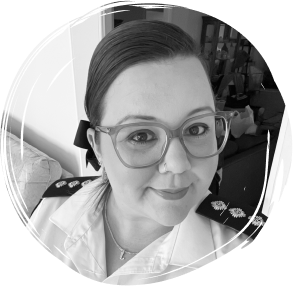
Jessica Robson: My first national competition in Adelaide was 2010 when the fires were going through. And it was bushfire season and it was hot, it was smoky, so there were flies everywhere. So I was doing my scene, I don’t remember exactly what I was doing. The next thing I know, I swallowed two flies and I’m choking on it, trying to cough it up, and they had to stop time, give me some water just so I could get over it, because I couldn’t continue.
Tim Duncan: As a kid, families didn’t travel as much as they do now. You know, it’s not uncommon for a family to go overseas, you know, to Europe or Bali or something like that. That didn’t happen then, you know, you were lucky enough to go to the beach a couple of times in summer. But so from about the time I was 15 I started going to national camps, which were held in different capital cities every year and every couple years they had these international camps that I went to two or three of and they were incredible activities.
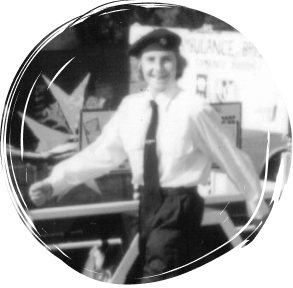
Malcom Knight: I became a cadet and progressed through the cadet ranks. Graduated to the adult division in 1983 and that was a real, you know, it’s an important ceremony for us. I came up with three, it was two of my mates and we graduated from a little graduation ceremony at Hornsby and we became adults and we were given our caps because there was a peak cap in those days and we’re very proud of that uniform. I went straight back iInto the cadet division as a cadet leader.
Jo-Anne Crennan: It was the first time at Government House that I was up being presented with something as well. So there was quite a bit of excitement, but just to know that I accomplished it.
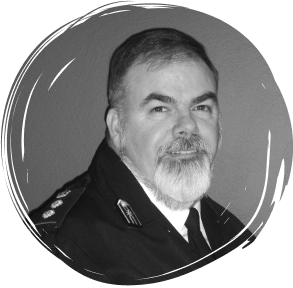
Alan Brown: The show was always a different experience. It was a different environment. It needed to be a bigger part of the big team and, you know, taking direction and being part of that, but the one that stands out most of all for me was the city surf. I don’t remember how old I was, but I was still a cadet, and I remember having to be one of the stretcher squad as we had somebody on a stretcher being carried across the finish line while I had CPR done to them. Because we couldn’t get an ambulance to them because of the number of runners at the finish line. And the story goes, and I can’t verify this, but the story goes that the runner ran the next year.
Melissa Oxley: So we had Altona and Bacchus Marsh and Melton, we were all highly competitive against each other, and they were big divisions as well. So it was always a competition on who was going to take out the big trophy at the end and bring home the plaque to put on the wall for the next year. So, it was healthy competition because a lot of our best friends were in those divisions.
Malcom Knight: We used to have the annual review at Victoria Barracks and I always felt very proud to be able to go to, you know, to a proper army institution and do proper drill in that environment. And we were reviewed by the governor. We were on parade and that was a very special day for us.
Noel Hender: Racing and race course duties were another popular event, especially when we as part of that duty always got invited to the dining room for a meal. So that was quite a privilege because there were only, I think, members of the racing clubs that got into those areas and we were very honored to be able to go in there and join them for a meal.
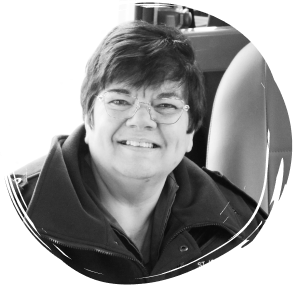
Susan Robertson: Favorite events were always on St John’s day because we did them at the cathedral and we’d march and play. So I’d play the clarinet and we’d all have to do the eyes, right, because we’d have the dignitaries along the way. And then we are all marching into the cathedral or to, to floriana. And it was miles and miles of St. Johnny’s.
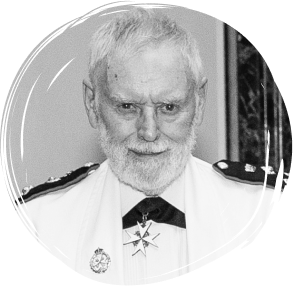
Allan Mawdsley: I did go to the queen’s visit in 1956. I have a photograph of her, when she was speaking from the steps of the shrine.
Noel Hender: I could move across to another form of racing that we also enjoyed as a local division. And that was in the trots, or as it’s now referred, as harness racing. And in Adelaide this was held centrally at the Ville Showgrounds, now a lovely big oval out there. And there again St. John’s presence was already always very prominent by the fact that before each race our members would all form up in lines at the side from our casualty room where we were on the side of the track cadets and adults together, cadets at the end, adults, and we would all march out into the middle of the oval. The cadets carrying the stretches, old fold up stretches, and from the middle of the oval, the officer in charge would bring us all to attention. And then mark us off as smaller groups within the bigger group and go to each of the corners of the track, and we’d march off over there and then we’d stay there for the duration of the race. And should there be a fall, we’d dash out onto the track. And you only had a certain amount of time before the horses did the full lap and were coming back around in that very spot again. So you have to do some quick assessment of your patient and sometimes they can get some very heavy falls. And so your assessment has to not only be relatively quick, but also accurate to ensure that you’re not going to be compromising the patient’s condition in any way as you shift them to the side of the track before the horses come around.
I can recall one year where and it wasn’t at my end where I was, but it was the other end, so I was in the middle watching, interestingly. And the rider got caught up in the actual gig of the horse itself, and the whole horse was on its side, and the gig was on its side and the horses came around again before our members had a chance to completely remove the person. And there was a little bit of risk. And the, especially when the first horse of the track of the group coming around the track shied at the event and rushed to the outside of the track. And we thought we were gonna be in for sort of multiple casualties, but apart from two or three horses breaking from their trot and going into a bit of a gallop fortunately no more came down. But yeah, that was always an interesting duty for young people.
Sally Hasler: I went to the Douglas Donald Training campground in Yarra Junction in Victoria. I used to spend every Easter up there for the Victorian Cadet Easter camp. I went to youth development and youth leadership training programs as well. Camps were heaps of fun. Mostly they were about fun and challenge and youth development as opposed to broader first aid skills.
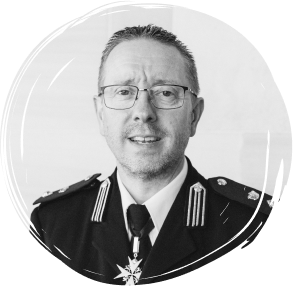
John Ward: We went on a camp and you know, we’d often go with other cadet divisions, which was really important, meeting new people and then the thing, I think that was it, then it became like you would meet up with other cadets. There wasn’t email in my day, there wasn’t internet, all the chats and all those sort of things. So there were cadets I met that you actually then wrote letters to. So in the old days you’d write letters when you didn’t see them or you’d have to ring them on a phone and you know. So you would actually hand write a letter, say, oh, it was so good to see you at camp. I look forward to seeing you at the next event.
Paul Cachia: Yeah, I would often see St John Victoria had a camp near the Junction that they owned. And my parents and sister would often go camping or go to a caravan park and stay whilst I was at [this] Camp Junction.
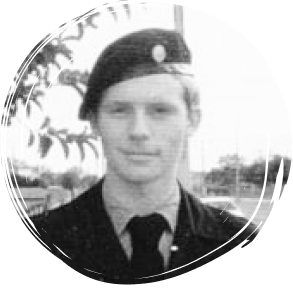
Robert Tremethick: In South Australia the ambulance service was run by St. John Ambulance and they had a system called Cadet on the cars. And so a St. John Uniformed Cadet member, I was 15, I began to train as a third person to work in the back of an ambulance with a full adult crew.
Tim Duncan: It gave me a bit of a reason for being, I think, not that you need that at 12, but it’s nice to have something to say you can be a bit proud of. Also, my, school I went to was a boys school and it was, as a whole, not a healthy environment. I don’t think nowadays, but in those days it was the norm and the whole lot of St. John kids went to that school from the local division. So there was like a little first aid club in the school. All my mates were in that group and they were ranging right from year seven through to twelve And they used to run, believe it or not, this is in the seventies, you know, a hundred years ago, the teachers used to let the St. John kids run the first aid route.
Memorable Moments conversation
Contributers
Allan Mawdsley

1949
Lyn Dansie
1949

Noel Hender
1957
Susan Robertson
1969
Robert Tremethick
1972
Alan Brown
1974
Malcolm Knight
1980

Jo-Anne Crennan
1983
John Ward
1986
Melissa Oxley
1987
Paul Cachia

Sally Hasler

Tim Duncan
Jessica Robson
2003
